Treatment of Pain During Marital Intimacy with a Structured Approach at Razna Center
70% of women are unaware that pelvic floor muscle tension is the real cause of pain during intimacy.
Marital life is a journey of love and serenity, and intimate moments between spouses are one of the highest expressions of this bond. But what happens when these moments, which are supposed to bring pleasure and harmony, turn into sources of pain and anxiety? Many women start to suffer silently, often accompanied by feelings of guilt.
In our societies, women are usually the focus when discussing marital difficulties, but the reality is that any issues in the intimate relationship may stem from one or both partners. Pain is not merely a physical symptom; it is a message from the body indicating a problem. The solution begins with awareness, followed by proper diagnosis, and ends with a structured treatment plan. Therefore, treating pain during marital intimacy does not just mean prescribing medications or exercises; it means addressing the couple as a single entity.
Why does treatment start with the husband’s awareness?
A common misconception is that a wife may think the pain during intimacy reflects a problem in her body, while the actual cause may relate to her husband’s practices or conditions. Ignoring this can lead to years of ineffective treatment. The husband may have infections that affect the wife, or anatomical issues that require specific positions to avoid pressure on sensitive areas. At Razna Center, we emphasize that treatment is a shared journey. Once the husband understands that his approach, timing, or health may contribute, we are halfway toward resolving the pain.
Why does vaginal spasm occur, and how do we start treatment?
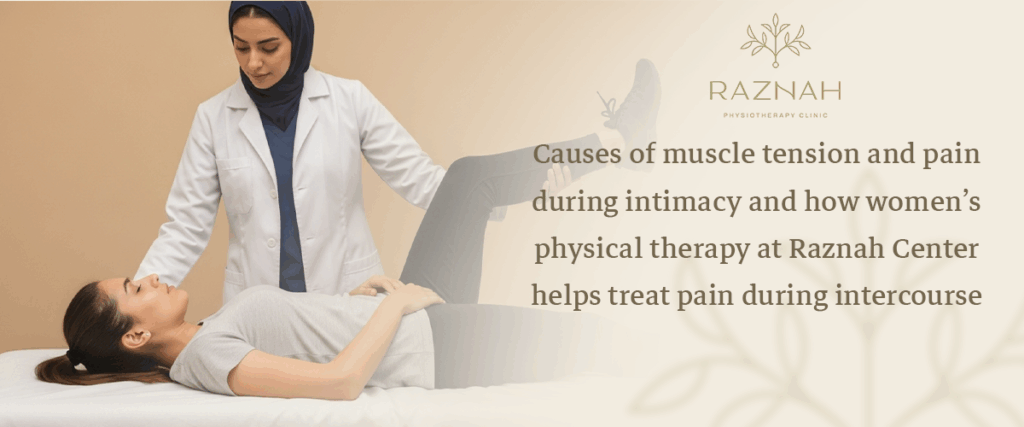
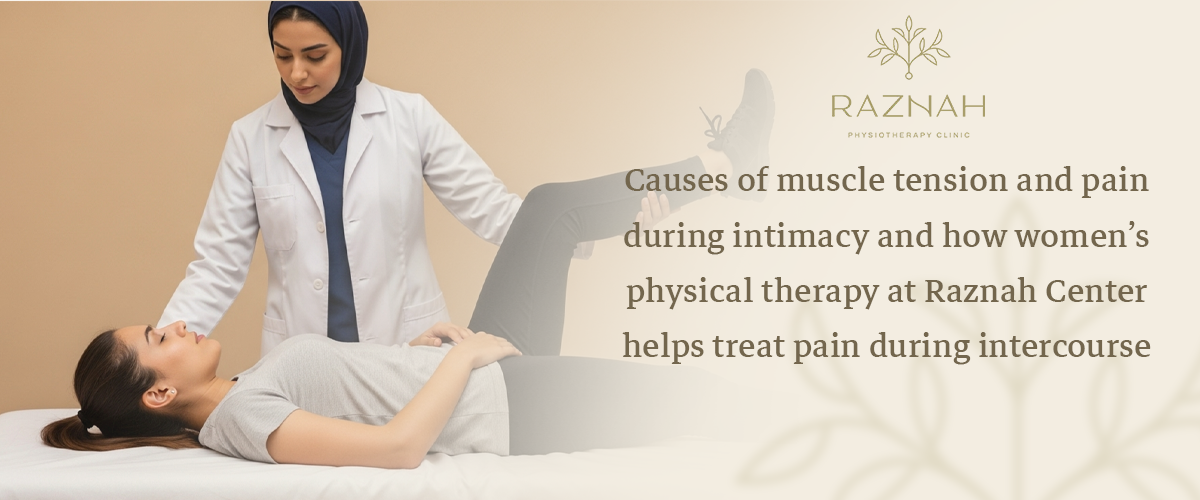
Vaginal spasm is a major cause of pain during intimacy, involving involuntary contraction of pelvic floor muscles that makes intercourse difficult or painful. Despite common belief that surgery is needed, in most cases, physiotherapy is the solution.
At Razna Center, we treat pain at its root: not only the muscles but also retraining the nervous system to stop sending “danger signals.” Treatment begins with relaxation and breathing exercises, followed by gradual techniques to release muscle memory. Medical devices may also be used under professional supervision.
How does physiotherapy for vaginal spasm work?
Vaginal spasm results from involuntary contraction of pelvic floor muscles, causing pain during intimacy. At Razna Center, our protocol combines physical and behavioral therapy to relax muscles and treat the cause at its source:
Teaching women deep breathing and muscle control to “turn off” the nervous system’s danger signals, accelerating improvement and reducing pain.
In cases of persistent tension, functional vaginal dilators are used to restore natural flexibility without affecting the area’s appearance.
Gradual training with stretching exercises and medical dilators in safe, supervised sessions restores tissue length and tolerance without pain.
Outcome: noticeable improvement in intimacy-related pain, reduced spasm, and restored confidence and marital balance.
Why use therapeutic vaginal dilation?
Flexibility is key to treating pain during intimacy. Therapeutic vaginal dilation restores natural elasticity that may be lost due to spasm, fear, or scarring. At Razna Center, we use gradually sized medical dilators to retrain vaginal muscles to stretch painlessly, starting with very small sizes and gradually progressing to normal functional size. Relaxation and breathing techniques are integrated for natural, functional expansion, directly contributing to pain relief.
Effective techniques to improve comfort during intimacy
Pain during intimacy may result from muscle tension, vaginal dryness, or weak pelvic floor muscles. Physiotherapy offers various solutions, including:
Pelvic Floor Exercises: Kegel exercises strengthen pelvic muscles, reduce spasm, improve blood flow, and increase comfort during intimacy.
Physiotherapy Techniques: Manual therapy or massage helps relax tight muscles and improve circulation, reducing pain.
Relaxation & Deep Breathing: Learning these techniques decreases mental and physical tension, easing pain by reducing pelvic floor strain.
Electrical Muscle Stimulation: Helps stimulate and strengthen weak or spasmodic pelvic muscles, improving performance and reducing pain.
At Razna Center, we provide customized programs combining physiotherapy, exercises, and relaxation techniques to improve comfort and achieve a pain-free sexual life.
Cesarean Section and Intimacy Pain: Role of Physiotherapy
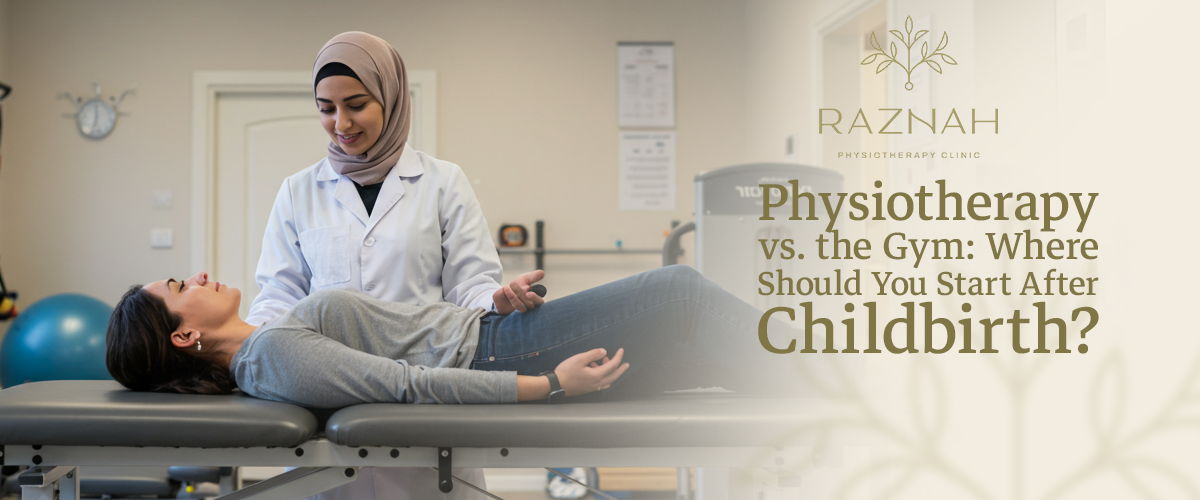
Many mothers experience pain or tension during intimacy after a C-section due to deep scarring. Physiotherapy is essential for reducing pain. At Razna Center, scar release and pelvic rehabilitation restore tissue flexibility, reduce tension, improve blood flow, and gradually normalize sensation, significantly enhancing post-cesarean marital intimacy.
Comprehensive treatment plan at Razna Center:
Pelvic floor, pelvis, and spine assessment.
Manual therapy for post-C-section scar release.
Trigger point therapy.
Deep breathing and relaxation techniques to calm the nervous system.
Muscle retraining (down-training).
Functional vaginal dilation with graded medical dilators.
Pelvic muscle rehabilitation and flexibility improvement.
Guidance on optimal intimate positions for each woman.
Management of dryness and tissue care.
Nutritional and lifestyle advice to reduce stress and enhance sensory response.
Start your recovery journey now. Book your first session at Razna Center and restore a pain-free marital life.
FAQs about pain during marital intimacy:
When do physiotherapy results appear?
Gradual onset: Improvement begins 24–48 hours after the session and decreases over a few days. Pain is localized in the working muscles or joints and is deep, not alarming, improving with light movement and stretching.
Why does a woman feel pain during intimacy?
Causes may include vaginal dryness, infections (yeast, urinary tract), skin issues, emotional/psychological factors, endometriosis, fibroids, pelvic inflammatory disease, or post-delivery/surgery injuries.
How do I know if I have a vaginal spasm?
Involuntary pelvic muscle contraction making penetration difficult or impossible, pain, difficulty inserting tampons or instruments, fear or avoidance of sex, and decreased desire due to pain and anxiety.
Types of pain: superficial or deep pelvic?
Distinguishing superficial versus deep pain helps determine the cause and appropriate treatment.
Can childbirth cause ongoing pain? When does intimacy return to normal?
Both vaginal and cesarean deliveries may cause injuries, scars, or spasms affecting comfort. Proper recovery time and physiotherapy, if needed, are essential.